Last week I spent four days in New Orleans at a storytelling workshop led by Micah and Kayla Green. Most of the group were working photographers, people who can walk any street and come out with a picture. Thomas, the guy I got to know best, was South Carolina's Photojournalist of the Year in 2020. Me? I make my living mostly with weddings, portraits, and brand work. I went to get uncomfortable on the street, and it worked.
On the last day, we each sat down with Micah, cut our week to 20 or 30 frames, then sequenced a final ten. Here's mine, and what I learned along the way.
Open the front door
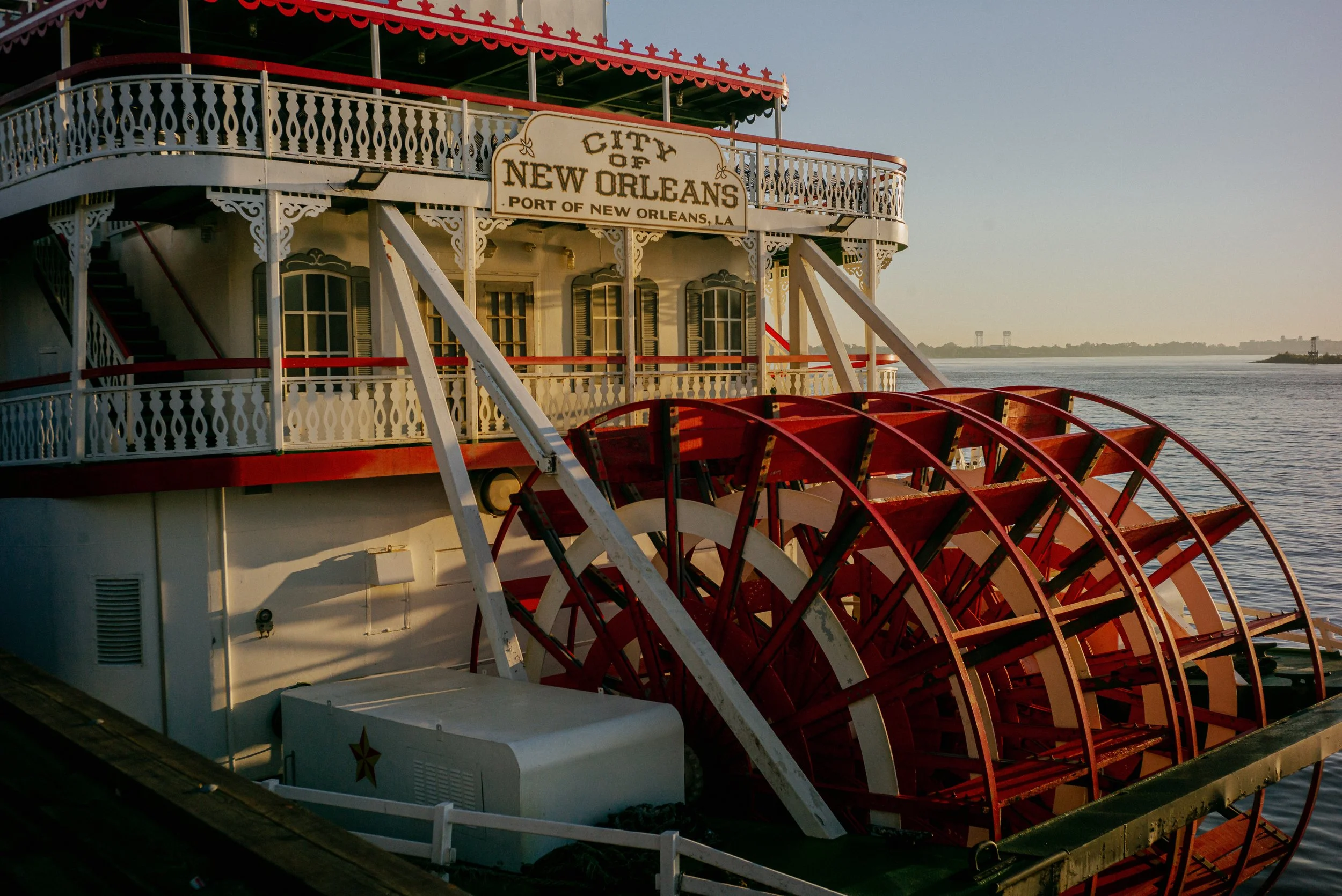
Yes, a steamboat at sunrise is about the most New Orleans picture you can make. I shot it on an early walk through the Quarter with Micah, talking about life and the workshop. But clichés are clichés for a reason. The light was beautiful, the composition is clean, and you know exactly where you are. Every sequence needs an introduction, and this one sets the scene.
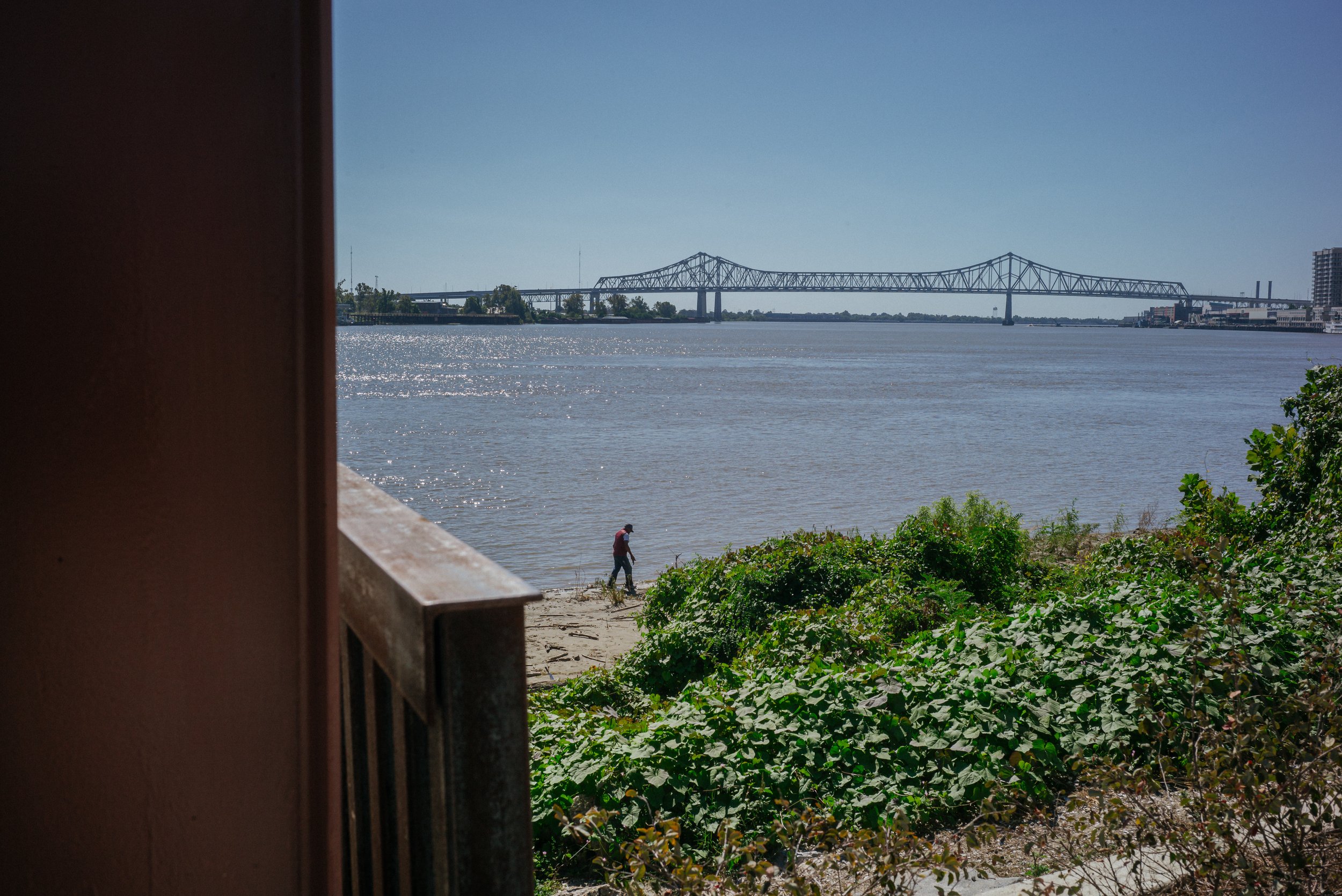
This man was fishing alone near the river. I put a pole in the foreground for depth and let the kudzu and the bridge fill the back. Keeping him small in the center makes the whole frame feel solitary. Honestly, that's how I felt that week. Not lonely, just on my own path.
Details are the connective tissue
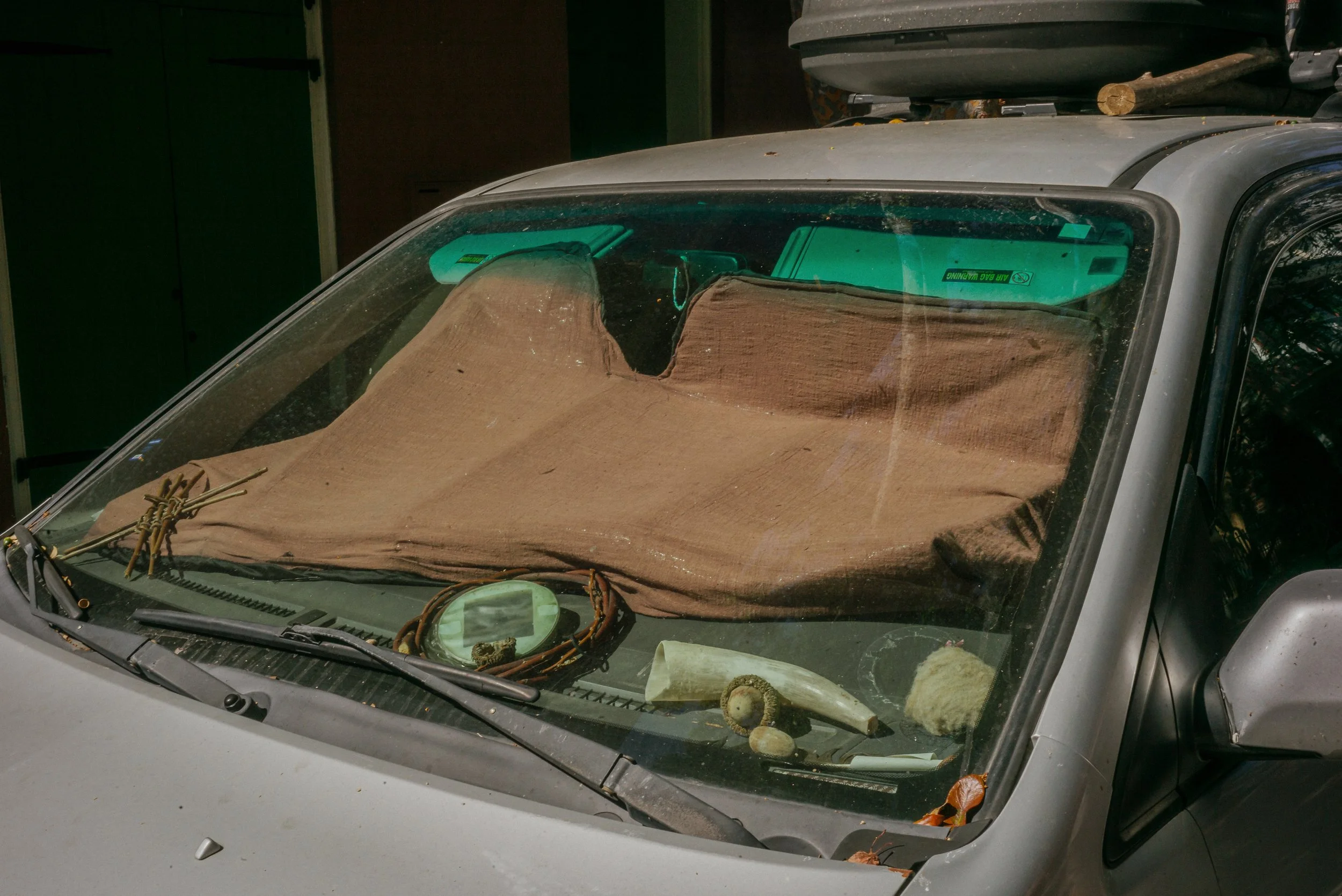
Here's my confession: I'm strong at portraits and wide, scene-setting shots, and weak at quiet details…the transition pictures that carry a story from one moment to the next. Kelsey and Thomas were incredible at them. So I made myself slow down. This parked car had a hollowed-out horn, a giant acorn, a woven reed crown, rolled-up moss, and wood stashed under the top storage. No person in the frame, but it's a whole character study.
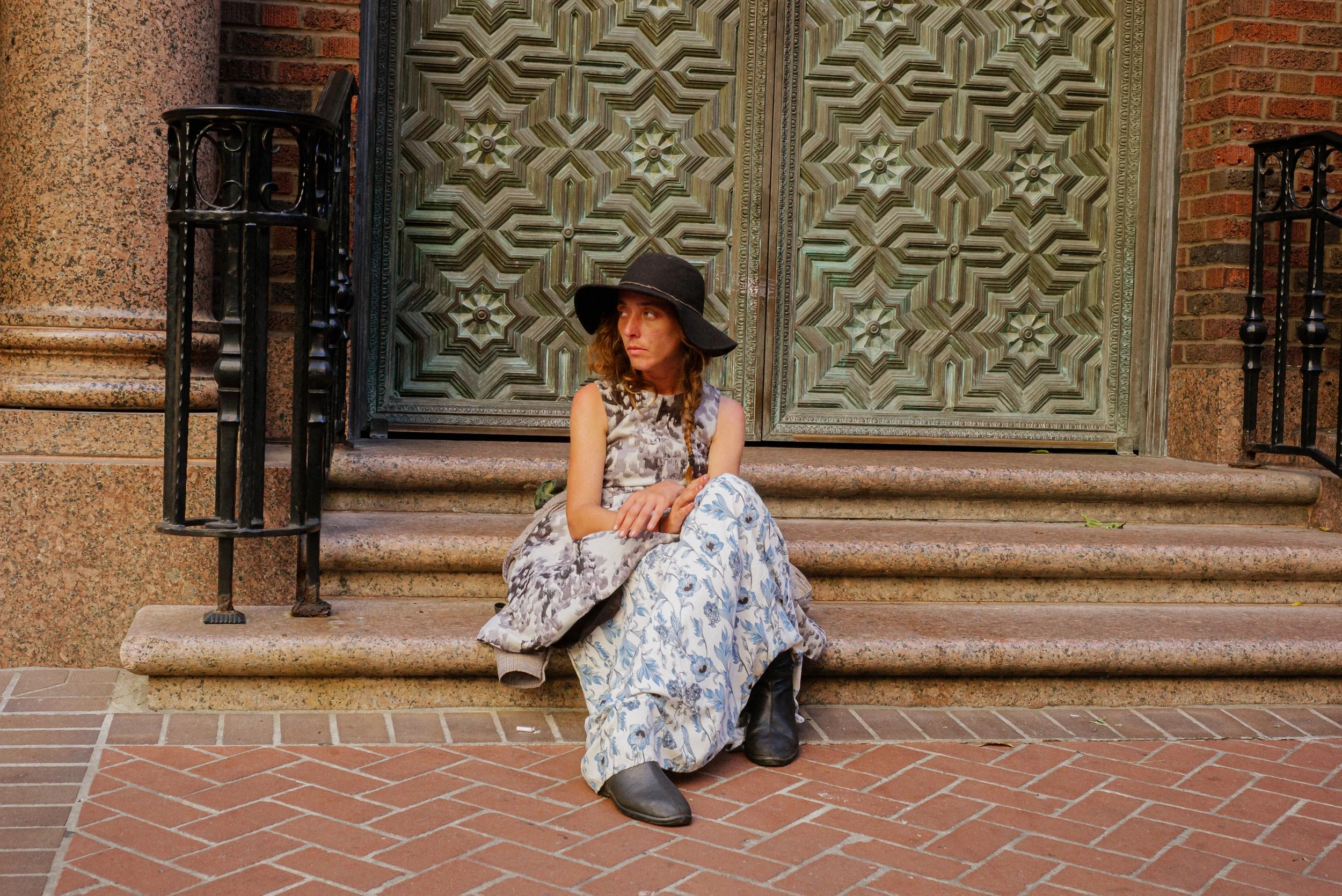
You can't tell if she's living rough or dressed for a fashion shoot, and I like that. A little ambiguity makes you lean in and write the story yourself.
When the sun goes down, make your own light
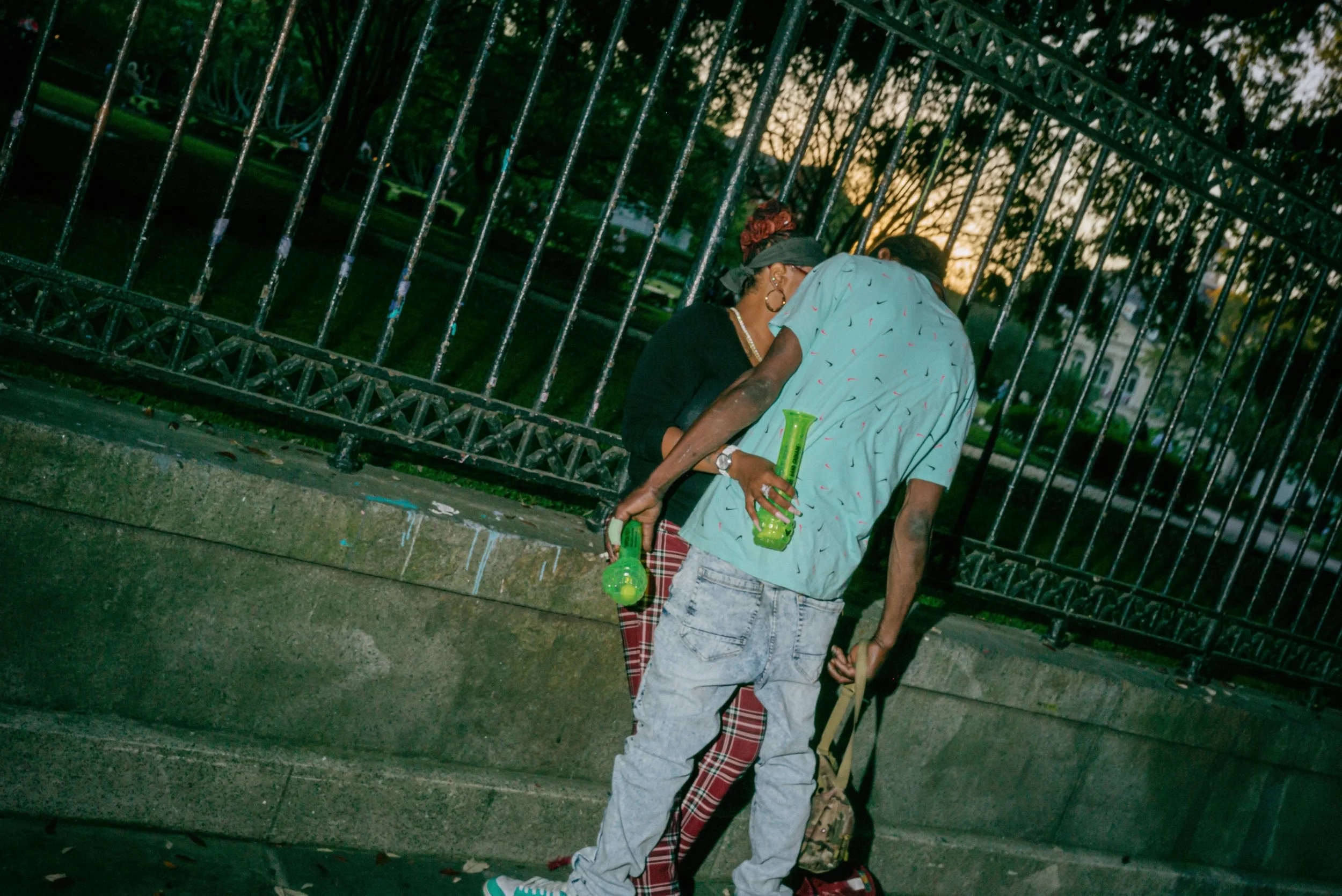
As the sun went down, I turned on the flash and locked it in. Sometimes a light fill to even things out, sometimes hard, direct flash with the background pulled down so the subject pops. This couple, kissing with hurricanes in hand, is about as New Orleans as it gets, and it reminded me why I love weddings. One lesson: I committed to flash too early. Next time I'm carrying two bodies, one with and one without.
Tremé
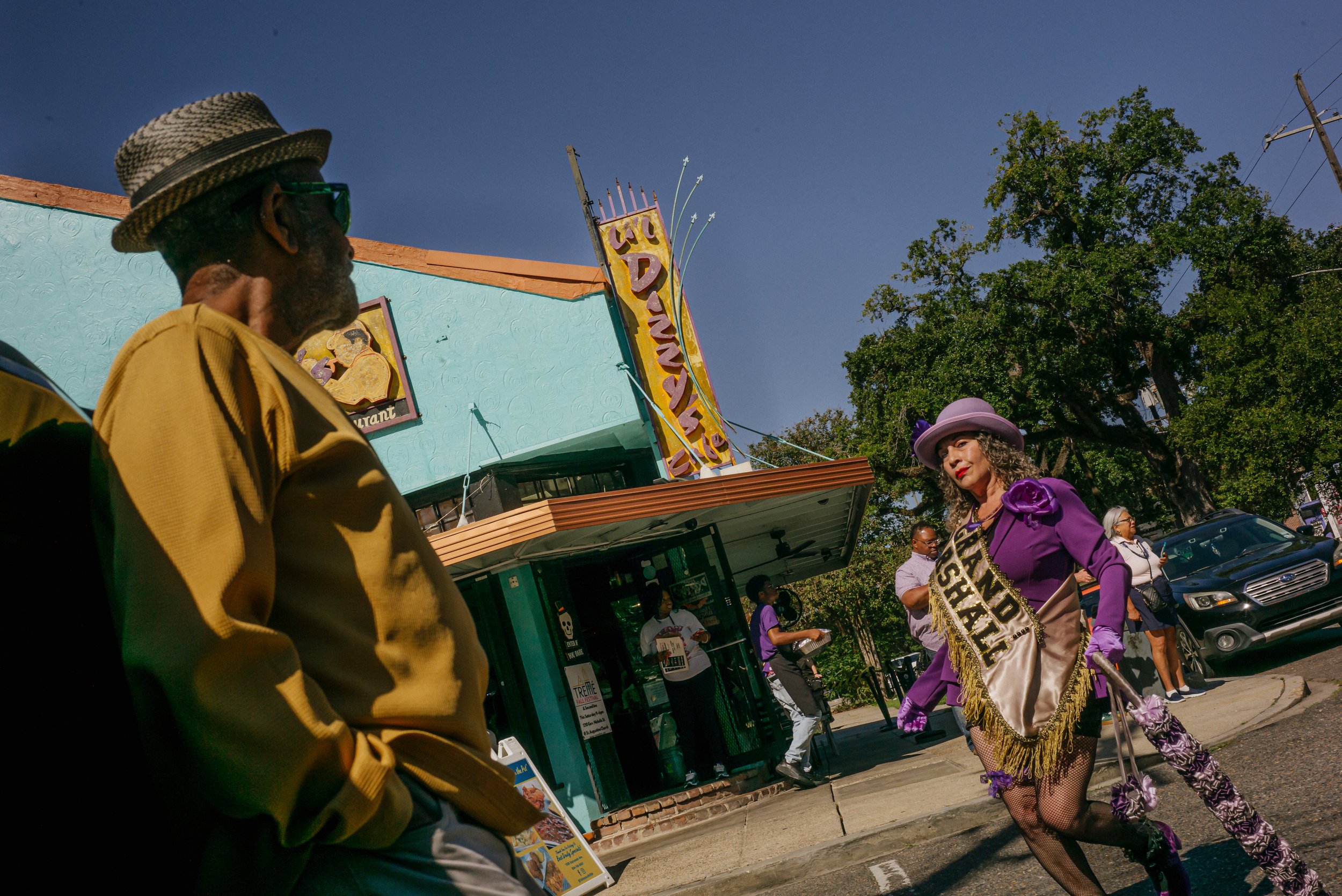
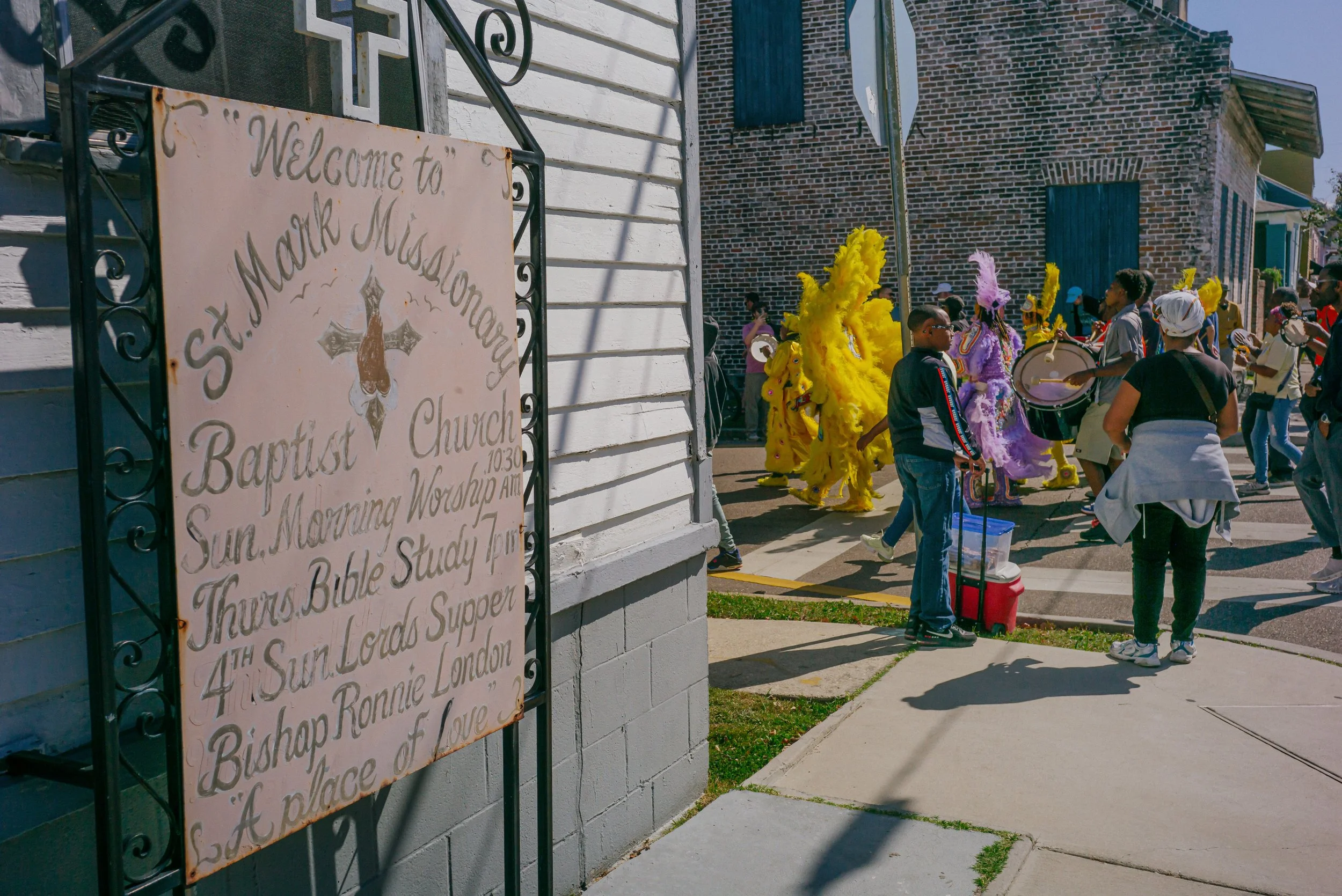
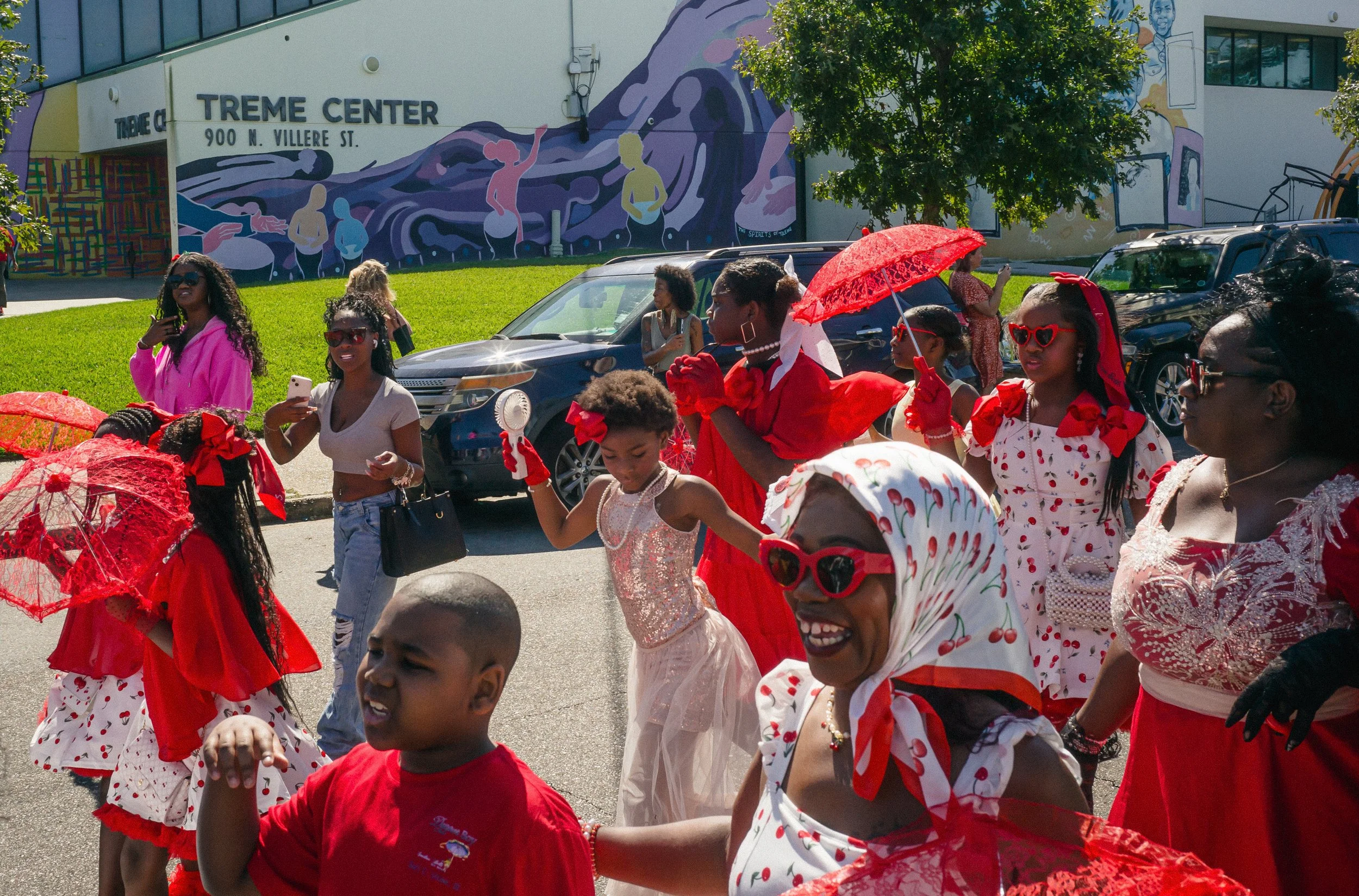
Saturday morning was the Tremé Fest second line, and it was one of the most beautiful things I've ever seen. Generations of families lined the sidewalk, cheering on kids as they played instruments and danced, with costumes and traditions handed down right in front of you. In each of these frames, I worked to get the place into the picture, whether it was Little Dizzy's, the church sign, or the Tremé Center logo, so the background tells you where you are without a caption.
A city has a personality even without people
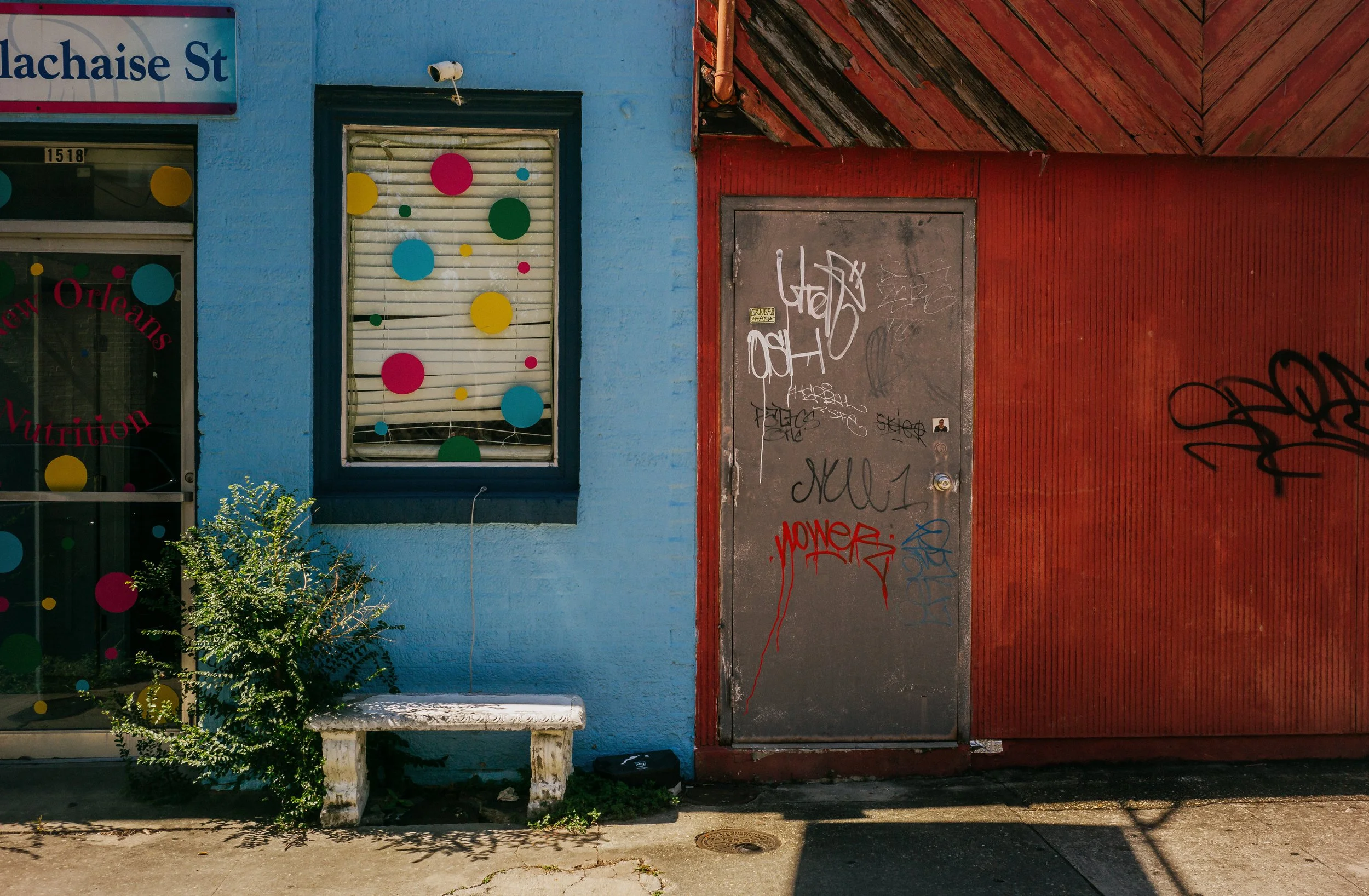
Many in the group felt uninspired in the Garden District because there weren't many people around. I loved it. House colors, yards, mailboxes, how the cars are parked: it all tells you who lives there. This is just the side of a building, flat and graphic, but the palette and those circles in the window set up the final frame.
End quietly, and leave room for a little magic
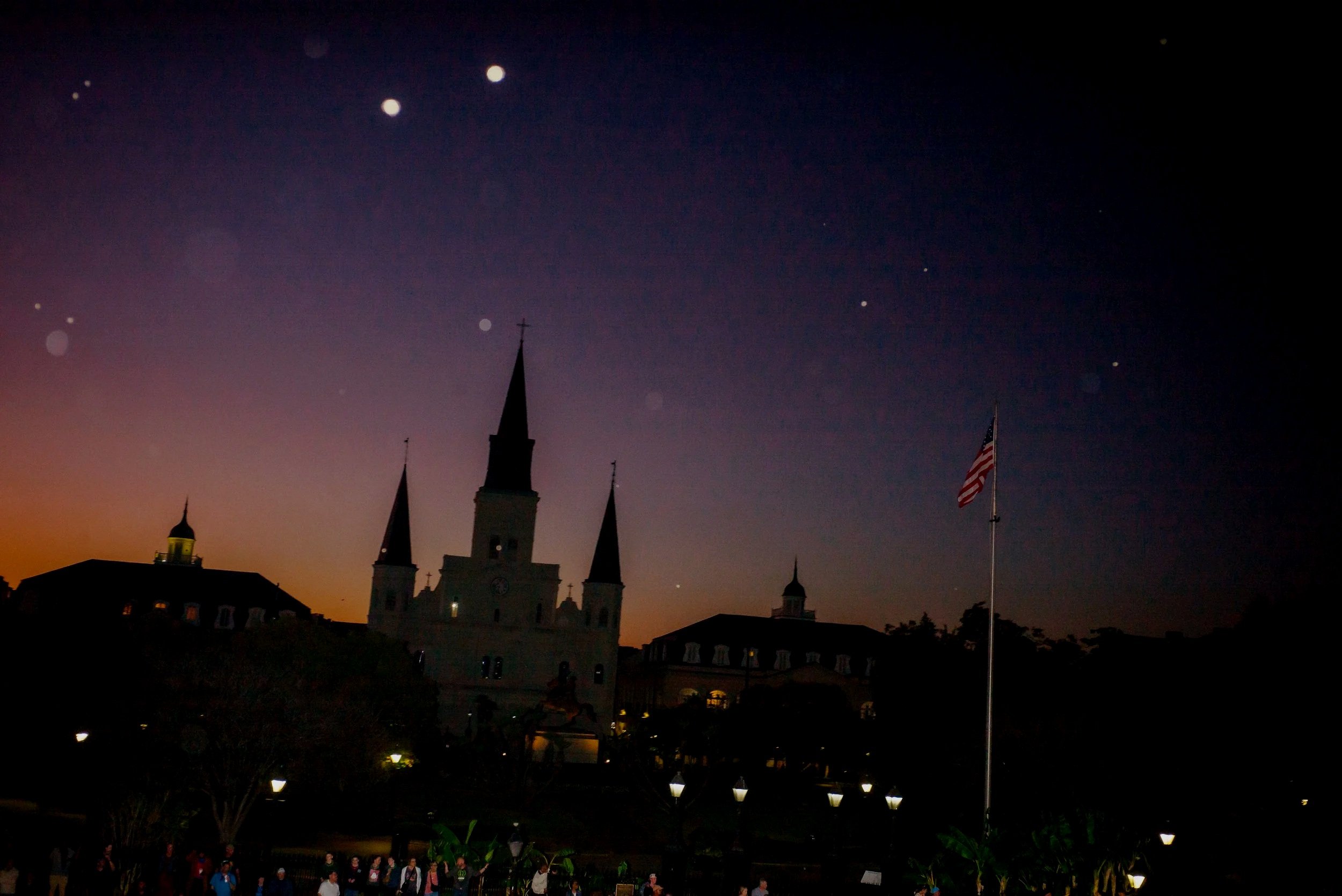
I wanted a Jackson Square picture nobody else had. When my flash popped, it lit up a couple dozen orbs floating through the air. There's probably a boring scientific explanation, but it's more fun to call them spirits. The cathedral looks like a storybook castle at dusk, the flags pop, people drift past. The sun sets on the city, and the sequence ends as quietly as it started.
What I'm bringing home
B-roll isn't throwaway. Another photographer paired a flower I'd walked right past with a portrait of a worker on break, and both pictures suddenly meant more. Shoot the in-between stuff. Sequencing gives it weight later.
Walk with other photographers. We shot as a group, which kept everyone moving instead of getting stuck on one scene. And we all photographed the same streets and the same people, yet came home drawn to completely different things.
Find your own story. Micah's big push for me was to dig deeper: less travel snapshot, more of a story I'm invested in. That's my next chapter, close to home, and I'm excited to start.
If you're a Pensacola photographer who wants to practice this stuff, come walk with me. Follow Pensacola Film Photography Walk on Instagram to catch the next one.
Thanks to Micah and Kayla Green, and to everyone in the group. I'm still learning from your pictures.